
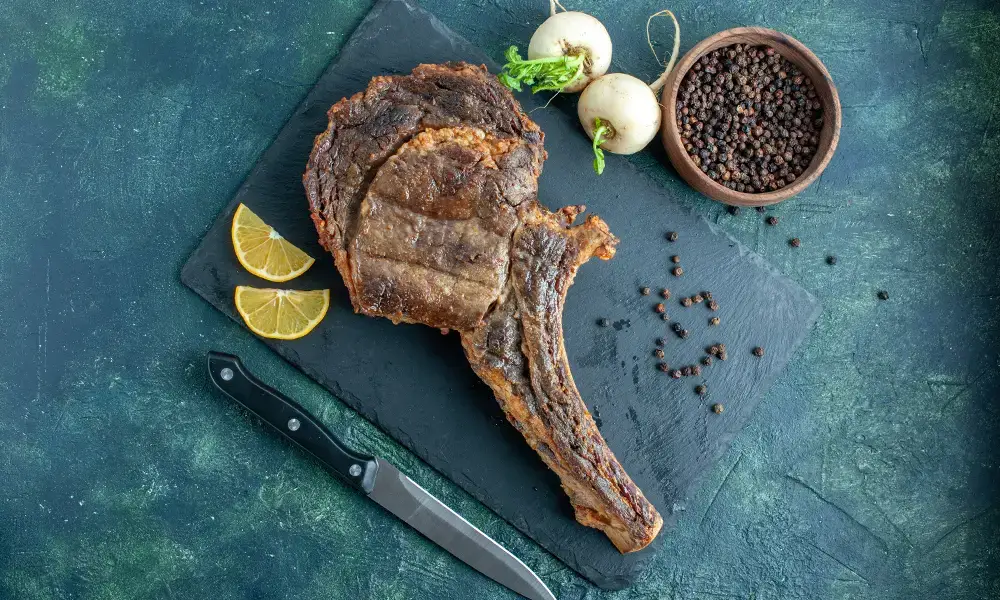
Few cuts make a statement quite like a tomahawk steak. With its long, French-trimmed bone and generous size, it’s as much a centrepiece as it is a meal. But cooking one at home to true steakhouse standard takes a bit more technique than a standard steak, purely because of its thickness and size.
This guide walks through exactly how to get it right, using our Grass-Fed Tomahawk Steak as the star of the show.
What Makes a Tomahawk Steak Different?
A tomahawk is essentially a bone-in ribeye with the rib bone left long and trimmed for presentation. Its thickness, typically 4–5cm or more, means it needs a different cooking approach compared to thinner cuts, since a standard high-heat-only method risks burning the outside before the centre reaches temperature.
Preparing Your Tomahawk Steak Before Cooking
- Remove from the fridge 45–60 minutes before cooking, given its thickness, to bring it closer to room temperature.
- Pat the surface completely dry with paper towel to help achieve a proper crust.
- Season generously with coarse salt, ideally 40 minutes or more before cooking, or right before if you’re short on time.
- Leave the bone exposed and clean, as it’s part of the visual presentation.
The Reverse Sear Method: The Steakhouse Secret
Professional kitchens often use the reverse sear method for thick cuts like tomahawk, and it’s easy to replicate at home.
Step 1: Slow Cook First
Place the steak in an oven preheated to around 120–130°C, or use indirect heat on a BBQ, until the internal temperature reaches about 5–8°C below your target doneness.
Step 2: Rest Briefly
Remove the steak and let it rest for 5–10 minutes while you heat a pan or grill to very high heat.
Step 3: Sear Hard and Fast
Sear the steak for 60–90 seconds per side in a very hot pan or over direct flame, focusing on building a deep, caramelised crust rather than cooking it further through.
Step 4: Rest Again Before Serving
Rest for a final 8–10 minutes under loose foil before carving, allowing juices to redistribute evenly throughout the meat.
Internal Temperature Guide for Tomahawk Steak
- Rare: 50–52°C
- Medium-rare: 54–57°C
- Medium: 60–63°C
- Medium-well: 65°C+
Always use a reliable meat thermometer inserted into the thickest part of the steak, avoiding contact with the bone, which can give a false reading.
How to Carve and Serve a Tomahawk Steak
Given its size, a tomahawk is typically served sliced rather than as an individual portion.
- Remove the meat from the bone using a sharp carving knife.
- Slice against the grain in even portions.
- Serve on a wooden board for a genuine steakhouse presentation.
- Finish with a pat of herb butter if desired, added just before serving.
What to Serve Alongside a Tomahawk Steak
- Roasted or grilled potatoes, ideally cooked in tallow for extra richness.
- A simple green salad to balance the richness of the meat.
- A bold red wine sauce or peppercorn jus for a classic steakhouse touch.
- Grilled seasonal vegetables for colour and variety on the board.
Common Mistakes to Avoid
- Skipping the rest period, which results in juices spilling out onto the board rather than staying in the meat.
- Cooking straight from the fridge, leading to an unevenly cooked centre.
- Overcrowding the pan, which lowers the temperature and prevents a proper sear.
Why Grass-Fed Beef Elevates a Tomahawk Steak
For a cut this significant, sourcing matters. Our tomahawk comes from grass-fed and finished cattle raised on Western Australian pastures, free from hormones and antibiotics, delivering a cleaner, more distinct flavour that stands up well to simple seasoning and high-heat cooking.
For more premium cuts to round out your next steak night, explore our full Beef range.
Final Thoughts
Cooking a tomahawk steak at home doesn’t require professional equipment, just patience, a reliable thermometer, and the reverse sear method. With the right technique, you can achieve genuinely steakhouse-quality results in your own kitchen.
Order the Grass-Fed Tomahawk Steak today and bring the steakhouse experience home.