
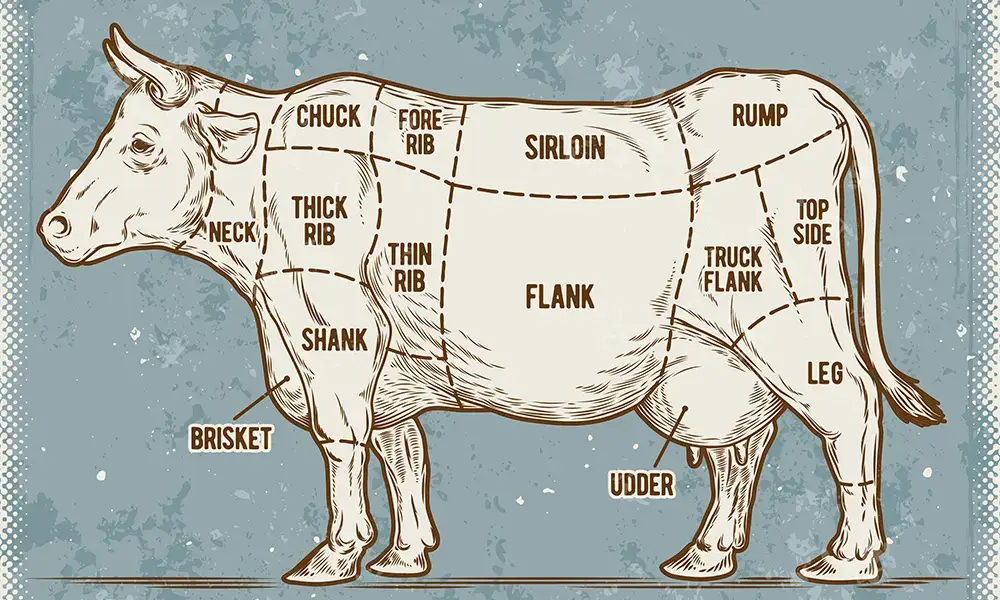
Buying meat in bulk sounds appealing, but the most common question people have before committing is simple: how much actual meat do you get? An eighth of a cow is one of the most popular entry points into bulk beef buying, offering a manageable quantity without requiring a large chest freezer.
Let’s break down exactly what’s included, using our Dry-Aged Bulk Beef Pack – Eighth Animal (Approx. 37kg) as the reference point.
What Does “An Eighth of a Cow” Actually Mean?
An eighth of a cow refers to roughly one-eighth of a whole animal’s usable meat yield, typically weighing around 35–40kg depending on the size of the animal it’s sourced from. This includes a mix of cuts rather than a single type of meat, giving you variety across steaks, roasts, and mince.
What Cuts Are Typically Included?
While exact cut breakdowns can vary slightly between orders, a typical eighth generally includes a mix of:
- Steaks – such as rump, porterhouse, or scotch fillet, depending on the cut plan.
- Roasts – suitable for Sunday dinners or larger family meals.
- Mince – ideal for weeknight staples like bolognese, tacos, or burgers.
- Diced beef – perfect for casseroles, curries, and slow-cooked meals.
This variety is one of the biggest advantages over buying a single type of cut in bulk, since it naturally supports a wider range of weekly meals.
How Long Does an Eighth of a Cow Typically Last?
For an average household of 2–4 people eating beef 2–3 times a week, an eighth of a cow generally lasts somewhere between 6–10 weeks, though this varies significantly based on portion sizes and how often beef features in your meal rotation.
To estimate for your own household:
- Calculate your typical weekly beef consumption in kilograms.
- Divide the total pack weight (approx. 37kg) by that figure.
- Adjust for larger cuts like roasts, which may serve multiple meals from one piece.
Freezer Space Required for an Eighth of a Cow
One of the most practical questions before buying bulk is whether you actually have room to store it. An eighth of a cow generally requires:
- Roughly the equivalent of a small-to-medium chest freezer, or
- A significant portion of a large upright freezer’s capacity.
If freezer space is limited, it’s worth measuring your available space against the approximate volume before ordering, rather than assuming it will fit into a standard fridge freezer compartment.
Is an Eighth of a Cow Worth It Compared to Smaller Purchases?
Generally, yes, for households that regularly eat beef. Buying in this quantity typically offers a better price per kilo compared to purchasing the same cuts individually over time, while still remaining manageable for smaller households compared to a larger quarter or half share.
Best Suited For:
- Couples or small families who eat beef a few times a week.
- First-time bulk buyers wanting to try bulk purchasing without committing to a larger share.
- Households with limited freezer space compared to a quarter or half cow.
Tips for Managing an Eighth of a Cow Efficiently
- Sort cuts by type immediately upon delivery to make future meal planning easier.
- Keep an inventory list so nothing gets forgotten at the back of the freezer.
- Plan meals around larger cuts first, such as roasts, since they take up more freezer volume.
- Rotate stock, using older cuts before newer ones to avoid freezer burn.
Why Choose a Grass-Fed Eighth Share
Since you’re committing to weeks of meals from one order, sourcing quality matters. Our eighth share comes from grass-fed and finished cattle raised on Western Australian pastures, free from hormones and antibiotics, with dry-ageing applied to enhance flavour and tenderness across the pack.
Final Thoughts
An eighth of a cow offers a practical, manageable entry point into bulk beef buying, delivering real variety and value without requiring a large freezer commitment. For households that eat beef regularly, it’s a straightforward way to save money while knowing exactly where your meat comes from.
Order the Dry-Aged Bulk Beef Pack – Eighth Animal today and stock your freezer with premium Western Australian grass-fed beef.