
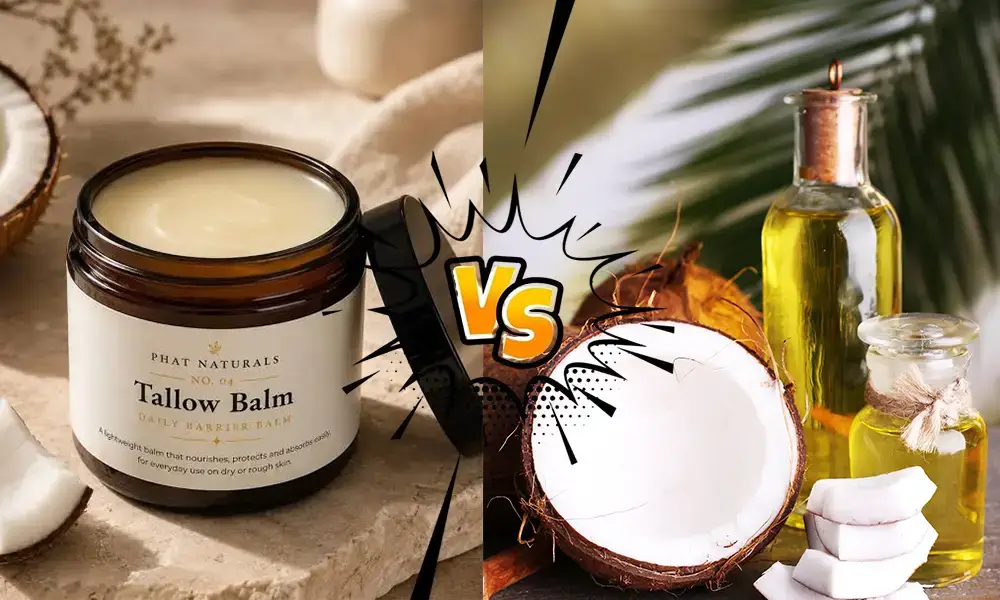
When dry skin sets in, the beauty aisle offers endless options, but two natural moisturisers keep coming up in conversation: tallow balm and coconut oil. Both have loyal followings, yet they work quite differently on the skin, so choosing the right one depends on your specific skin type and concerns.
This guide breaks down the differences, using our Grass-Fed Tallow & Coconut Oil Balm as an example of how the two can actually work together.
What Is Tallow Balm?
Tallow balm is made from rendered beef fat, often combined with complementary natural oils. Its fatty acid profile closely resembles the lipids found naturally in human skin, which is why many people find it absorbs without feeling greasy despite being a rich, dense fat.
What Is Coconut Oil?
Coconut oil is a plant-based fat extracted from coconut flesh, composed largely of medium-chain fatty acids. It’s solid at cooler temperatures and melts on contact with skin, giving it a smooth, glide-on texture that many people associate with tropical or “natural” skincare.
Comparing Tallow Balm and Coconut Oil for Dry Skin
| Factor | Tallow Balm | Coconut Oil |
| Fatty acid similarity to skin | Very close match | Less similar structurally |
| Absorption | Gradual, deeply moisturising | Fast, lighter feel |
| Comedogenic rating | Generally lower | Moderately high for some skin types |
| Best for | Very dry, mature, or compromised skin | Normal to combination skin, hair, and body |
| Texture in cooler climates | Firm balm, softens on contact | Solid, needs warming to melt |
Why Tallow Balm Often Suits Very Dry Skin Better
Because tallow’s fat structure closely mirrors the skin’s own sebum, it tends to sit well on very dry, flaky, or compromised skin barriers. Many people who find coconut oil sits on top of the skin without truly absorbing report a noticeably different result with tallow-based balms.
Tallow balm is also generally considered less likely to clog pores compared to coconut oil, which carries a moderately high comedogenic rating and can be problematic for those prone to breakouts.
Where Coconut Oil Still Shines
Coconut oil isn’t without its strengths. It works well as:
- A hair treatment, particularly for dry ends or as a pre-shampoo treatment.
- A body moisturiser for those with normal to combination skin without breakout concerns.
- A multi-purpose kitchen and skincare staple, given its dual-use versatility.
For people without particularly dry or reactive skin, coconut oil can still be an effective, affordable option.
Why Combining Both Can Work Even Better
Rather than choosing strictly one or the other, many skincare routines benefit from combining tallow with a small amount of coconut oil. The tallow provides deep, skin-similar moisture, while the coconut oil adds a lighter, smoother glide, which is exactly the balance our combined balm aims to achieve.
How to Use Tallow Balm for Best Results
- Apply to slightly damp skin after showering to help lock in moisture.
- Use a small amount first, since a little goes a long way with dense, rich balms.
- Focus on particularly dry areas like elbows, knees, and hands.
- Store in a cool, dry place, as balms soften in warmer temperatures.
Common Questions About Tallow-Based Moisturisers
Is Tallow Balm Suitable for Sensitive Skin?
Many people with sensitive or eczema-prone skin find tallow balm gentle, given its similarity to natural skin lipids, though a patch test is always recommended before regular use.
Does It Have a Strong Smell?
Plain or lightly blended tallow balms typically carry a mild, natural scent rather than a strong or overpowering fragrance.
Is It Vegan or Vegetarian?
No, tallow is an animal-derived fat, so it’s not suitable for vegan or vegetarian skincare routines.
Why Sourcing Matters for Tallow Balm
The quality of a tallow balm depends entirely on the quality of the fat behind it. Our balm is made using tallow from grass-fed and finished cattle raised on Western Australian pastures, free from hormones and antibiotics, ensuring a clean, traceable ingredient at the core of the product.
If you’re building out a natural skincare routine, it’s worth browsing our full Skincare range for complementary balms and soaps.
Final Thoughts
Both tallow balm and coconut oil have a place in natural skincare, but for genuinely dry or compromised skin, tallow’s similarity to the skin’s own fats often makes the bigger difference. Combining the two can offer the best of both textures and benefits.
Shop the Grass-Fed Tallow & Coconut Oil Balm today and give your skin a genuinely natural moisture boost.