
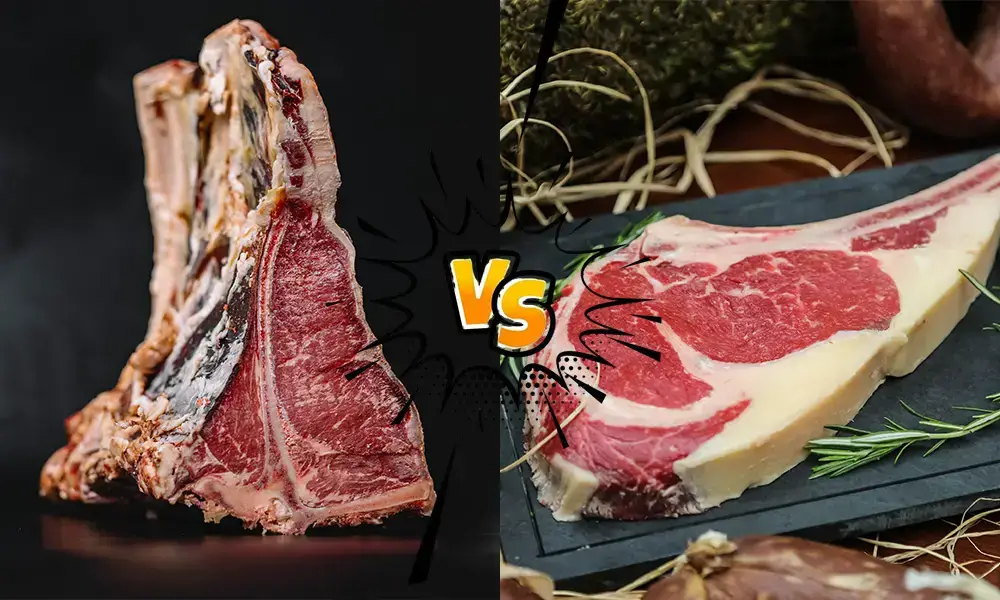
If you’ve been comparing bulk beef packs, you’ve likely noticed two different ageing methods on offer: dry aged and wet aged. Both processes affect flavour, texture, and price, so understanding the difference helps you choose the pack that actually suits your household.
This guide compares the two directly, using our Wet-Aged Bulk Beef Pack – Eighth Animal (Approx. 37kg) as a reference point for comparison.
What Is Dry Aged Beef?
Dry ageing involves storing beef in a temperature- and humidity-controlled environment, uncovered, for a period ranging from a few weeks to several weeks. During this time, moisture evaporates and natural enzymes break down muscle fibres, concentrating flavour and improving tenderness.
Characteristics of Dry Aged Beef
- Deeper, more concentrated beefy flavour.
- Firmer, more tender texture due to enzymatic breakdown.
- Slight trimming loss, since the outer dried layer is removed before packaging.
- Typically a higher price point, reflecting the time and controlled conditions required.
What Is Wet Aged Beef?
Wet ageing involves vacuum-sealing beef in its own juices and storing it under refrigeration for a period, usually one to a few weeks. The beef ages in a sealed environment rather than being exposed to air.
Characteristics of Wet Aged Beef
- Milder flavour profile compared to dry aged.
- Higher yield, since there’s no moisture loss or trimming required.
- More consistent moisture content, resulting in a juicier bite for many cuts.
- Generally more affordable than dry aged equivalents.
Side-by-Side Comparison
| Factor | Dry Aged | Wet Aged |
| Flavour | Concentrated, nutty, complex | Milder, cleaner beef flavour |
| Texture | Very tender, firmer bite | Tender, juicier |
| Yield | Lower (due to trimming) | Higher (no trimming loss) |
| Price | Higher | More budget-friendly |
| Best for | Special occasions, steak lovers | Everyday cooking, larger households |
Which Pack Should You Choose?
Choose Dry Aged If:
- You prioritise depth of flavour over cost.
- You’re planning special-occasion meals or entertaining guests.
- You appreciate a firmer, more distinct steak texture.
Choose Wet Aged If:
- You’re stocking a freezer for everyday family meals.
- Budget and yield per kilo are important considerations.
- You prefer a milder, more classic beef flavour across a range of dishes.
Neither option is objectively “better,” as the right choice depends entirely on your household’s cooking habits and priorities.
How to Cook Each Type for Best Results
Dry aged beef, with its concentrated flavour, generally needs less seasoning and benefits from simple high-heat cooking methods like grilling or pan-searing. Wet aged beef, being slightly milder, can handle bolder marinades and sauces without the underlying flavour getting lost.
Regardless of which ageing method you choose, always:
- Rest meat before cooking to bring it closer to room temperature.
- Use a meat thermometer rather than guessing doneness by eye.
- Rest again after cooking for at least 5–10 minutes before slicing.
Storage Considerations for Bulk Packs
Both dry aged and wet aged bulk packs require adequate freezer space and organisation:
- Label cuts clearly by type and date when they arrive.
- Portion into meal-sized packs before freezing where possible.
- Maintain a freezer temperature of -18°C or below for long-term storage.
Why Sourcing Matters, Regardless of Ageing Method
Whichever ageing process you choose, the quality of the underlying beef still matters most. Our bulk packs, both dry and wet aged, are sourced from grass-fed and finished cattle raised on Western Australian pastures, free from hormones and antibiotics.
Final Thoughts
Dry aged and wet aged beef each offer genuine advantages depending on what your household values most: concentrated flavour and texture, or affordability and everyday versatility. Understanding the difference means you can choose confidently rather than guessing.
Explore the Wet-Aged Bulk Beef Pack today and find the right fit for your household’s freezer.