
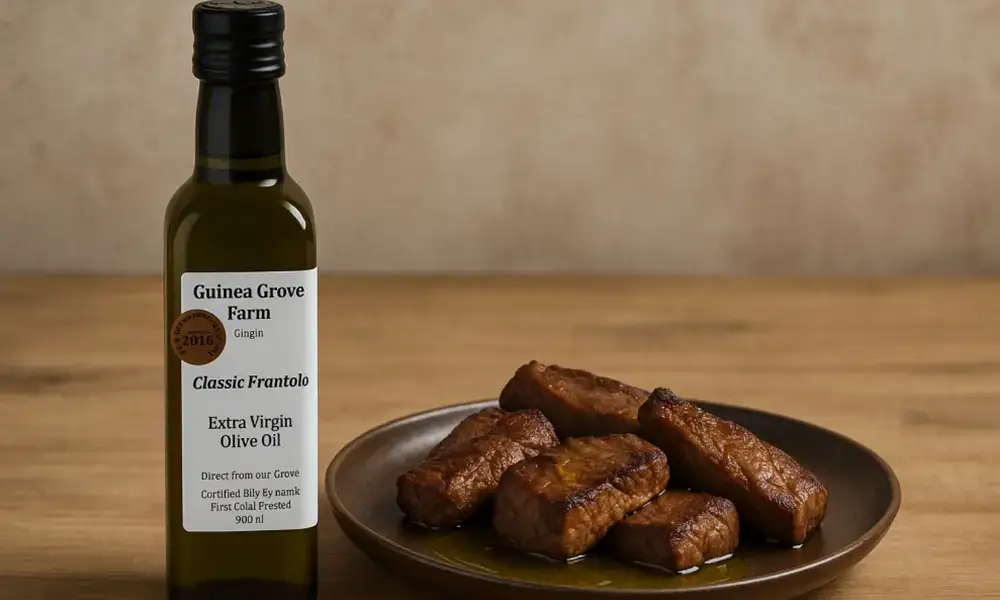
Not all olive oils are created equal, and increasingly, quality-conscious cooks are looking beyond the standard supermarket bottle toward biodynamic extra virgin olive oil. Grown and produced using stricter, more holistic farming practices, biodynamic oil offers a noticeably different product from mass-produced alternatives.
This guide explores what sets it apart, using our Guinea Grove Certified Biodynamic Extra Virgin Olive Oil as an example.
What Does “Biodynamic” Actually Mean?
Biodynamic farming goes beyond organic certification, incorporating a holistic approach to soil health, biodiversity, and farm ecosystem management. Certification bodies typically require strict standards around soil regeneration, natural pest management, and minimal external inputs, resulting in olives grown within a genuinely self-sustaining farm system.
How Biodynamic Olive Oil Differs from Standard Extra Virgin Olive Oil
| Factor | Biodynamic Extra Virgin Olive Oil | Standard Extra Virgin Olive Oil |
| Farming approach | Holistic, closed-loop farm ecosystem | Varies, often conventional |
| Certification standards | Strict, third-party certified | Extra virgin standard only |
| Soil management | Actively regenerated | Not always prioritised |
| Flavour consistency | Often more distinct, terroir-driven | Can vary significantly by brand |
| Traceability | Typically higher | Often blended from multiple sources |
Why Quality Matters So Much with Olive Oil
Olive oil is one of the most commonly adulterated food products globally, with some studies finding that a significant proportion of oils labelled “extra virgin” fail to meet genuine extra virgin standards once tested. Choosing a certified, traceable source like biodynamic oil significantly reduces this risk, since certification requires rigorous verification at each stage of production.
Potential Benefits of Choosing Biodynamic Olive Oil
- Higher likely polyphenol content, given the emphasis on natural, minimally intervened growing methods, which some research links to the antioxidant properties associated with genuine extra virgin oils.
- Greater transparency, since biodynamic certification requires detailed farm practice documentation.
- Support for regenerative farming practices, which prioritise long-term soil and ecosystem health over short-term yield.
- Often a more distinct, robust flavour, reflecting the specific growing conditions of the farm.
How to Use Biodynamic Extra Virgin Olive Oil
- Use it for finishing dishes rather than high-heat cooking, to preserve its flavour and delicate compounds.
- Drizzle over salads, roasted vegetables, or fresh bread to let its flavour stand out.
- Pair with quality proteins, like a simply grilled steak or roasted lamb, to complement rather than mask the meat’s natural flavour.
- Store away from direct light and heat, which can degrade oil quality over time.
Common Questions About Biodynamic Olive Oil
Is It Worth the Higher Price Compared to Standard Oil?
For those who use olive oil regularly and care about traceability and flavour, many find the price difference justified, particularly for finishing use rather than everyday high-heat cooking where cheaper oils may be more practical.
Does It Taste Noticeably Different?
Many biodynamic oils carry a more robust, peppery, or distinctly fruity flavour profile compared to mass-produced blends, reflecting the specific character of the farm and growing season.
How Should It Be Stored?
Like all extra virgin olive oils, it should be stored in a cool, dark place, ideally in a dark glass bottle, to protect it from light degradation.
Pairing Biodynamic Olive Oil with Quality Meat
Good olive oil and good meat share a similar philosophy: careful sourcing and minimal intervention. Drizzling a quality biodynamic oil over a simply grilled grass-fed steak or roasted lamb allows both ingredients to shine without one overpowering the other.
For more pantry essentials to pair with your next meat order, browse our full Groceries range.
Final Thoughts
Biodynamic extra virgin olive oil offers a genuinely different product from standard supermarket options, backed by stricter farming standards, greater traceability, and often a more distinct flavour. For anyone who cares about where their food comes from, it’s a worthwhile addition to the pantry.
Shop the Guinea Grove Certified Biodynamic Extra Virgin Olive Oil today and taste the difference for yourself.