
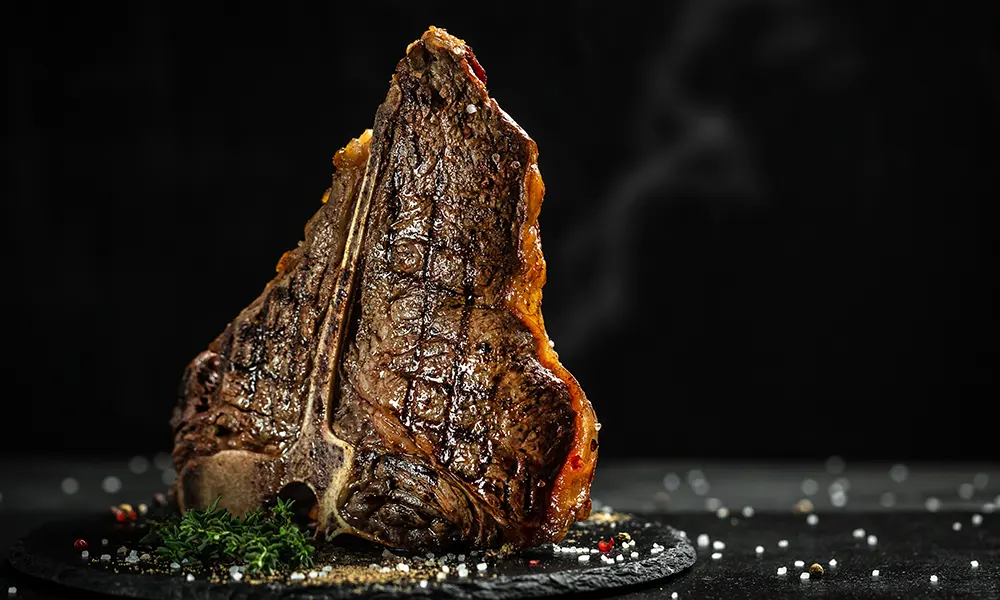
A beef porterhouse steak is one of the most impressive cuts you can cook at home. It’s large, rich in flavour, and combines two premium textures in one steak: the tenderloin and the strip loin, separated by a T-shaped bone. When cooked well, it delivers a steakhouse-style experience straight from your kitchen.
If you’ve been searching for how to cook porterhouse steak, or want to understand porterhouse steak calories and simple porterhouse steak recipes, this guide covers everything step by step in a practical, easy-to-follow way.
What Is a Beef Porterhouse Steak?
A porterhouse steak comes from the short loin section of beef. It is similar to a T-bone but with a larger portion of tenderloin.
Key features:
- Two cuts in one: strip steak + tenderloin
- Thick central bone for added flavour
- Large portion size (ideal for sharing)
- Best cooked using high heat methods
The porterhouse is often considered a “premium steakhouse cut” because of its size and tenderness combination.
When sourced well, such as from Gingin Grass Fed, it delivers strong natural beef flavour with minimal seasoning.
Porterhouse vs T-Bone: Quick Difference
People often confuse the two:
- T-bone steak: smaller tenderloin section
- Porterhouse steak: larger tenderloin section
So if you want more filet-style tenderness, porterhouse is the better choice.
Porterhouse Steak Calories (Nutrition Breakdown)
Understanding porterhouse steak calories helps you plan balanced meals without guessing.
Average values (per 100g cooked porterhouse steak):
- Calories: 250–320 kcal
- Protein: 22–26g
- Fat: 18–24g
- Iron: High
- Zinc: High
- Vitamin B12: High
What affects calories:
- Fat marbling level
- Cooking method (grilling vs frying)
- Portion size
- Added butter or sauces
Health note:
Porterhouse steak is nutrient-dense and high in protein, making it suitable for balanced diets when paired with vegetables or lighter sides.
How to Cook Porterhouse Steak (Step-by-Step Guide)
This section explains how to cook porterhouse steak for juicy, tender results every time.
Step 1: Bring Steak to Room Temperature
Take the steak out of the fridge 30–45 minutes before cooking.
Why it matters:
- Even cooking throughout
- Better crust formation
- Reduces risk of overcooked edges
Step 2: Season Simply
A beef porterhouse steak doesn’t need complicated seasoning.
Use:
- Sea salt
- Cracked black pepper
- Optional: light oil coating
Let it rest for 10–15 minutes after seasoning.
Step 3: Choose Your Cooking Method
You have two main options:
1. Pan + Oven Method (Most consistent)
- Sear in a hot cast iron pan
- Flip after 2–3 minutes
- Transfer to oven at 180–200°C
- Finish to desired doneness
2. Grill Method (Smoky flavour)
- Preheat grill to high heat
- Cook 3–5 minutes per side
- Move to indirect heat if needed
Step 4: Internal Temperature Guide
- Rare: 50–52°C
- Medium-rare: 54–57°C
- Medium: 60–63°C
- Medium-well: 65–68°C
Medium-rare is most commonly recommended for porterhouse steak.
Step 5: Rest Before Serving
Rest for 5–10 minutes after cooking.
This helps:
- Redistribute juices
- Improve tenderness
- Prevent dryness when slicing
Butter Basting for Extra Flavour
Butter basting adds a rich finish.
What you need:
- Butter
- Garlic cloves
- Rosemary or thyme
Method:
- Add butter after searing
- Spoon melted butter over steak repeatedly
- Continue for 1–2 minutes
This enhances crust and flavour depth.
Easy Porterhouse Steak Recipes
Here are simple porterhouse steak recipes you can try at home.
1. Garlic Herb Porterhouse Steak
- Butter
- Garlic
- Rosemary
- Thyme
Cook steak, then baste with herb butter for a classic flavour profile.
2. Pepper Crust Porterhouse Steak
- Crushed black pepper
- Salt
Press pepper into steak before cooking for a bold, steakhouse-style crust.
3. BBQ Porterhouse Steak
- Light BBQ glaze in final minutes
- Optional honey for sweetness
Best suited for outdoor grilling.
4. Chimichurri Porterhouse Steak
- Fresh parsley
- Garlic
- Olive oil
- Vinegar
Serve sauce on top after resting for a fresh contrast.
Best Side Dishes for Porterhouse Steak
Pairing matters as much as cooking.
Simple sides:
- Roast potatoes
- Grilled asparagus
- Garlic mashed potatoes
Fresh options:
- Green salad
- Tomato onion salad
- Rocket with olive oil
Rich pairings:
- Mushroom sauce
- Creamy corn
- Mac and cheese
Common Mistakes to Avoid
When cooking beef porterhouse steak, avoid:
- Cooking straight from the fridge
- Skipping drying step
- Overcrowding pan
- Cutting too early
- Using low heat only (no crust forms)
Small details make a big difference.
Storage Tips
Refrigeration:
- Store cooked steak up to 3 days
Freezing:
- Wrap tightly
- Store up to 2–3 months
Reheating:
- Low oven heat works best
- Add butter or broth to keep moisture
Why Meat Quality Matters
A porterhouse steak only performs well if the raw product is good.
Grass-fed beef tends to:
- Have stronger natural flavour
- Cook slightly faster
- Require simpler seasoning
That’s why sourcing from producers like Gingin Grass Fed helps achieve consistent results at home.
Final Summary
You now know:
- What a porterhouse steak is
- How to cook porterhouse steak properly
- Porterhouse steak calories and nutrition breakdown
- Simple recipe variations
- Cooking mistakes to avoid
- Serving and storage tips
The key is simple: high heat, proper seasoning, and good resting time.
If you want a better steak night at home, start with quality cuts that already have great flavour.
Choose grass-fed, ethically raised beef from Gingin Grass Fed and cook with confidence.
👉 Order your beef porterhouse steak today and bring restaurant-quality meals to your kitchen with less effort and better results.