
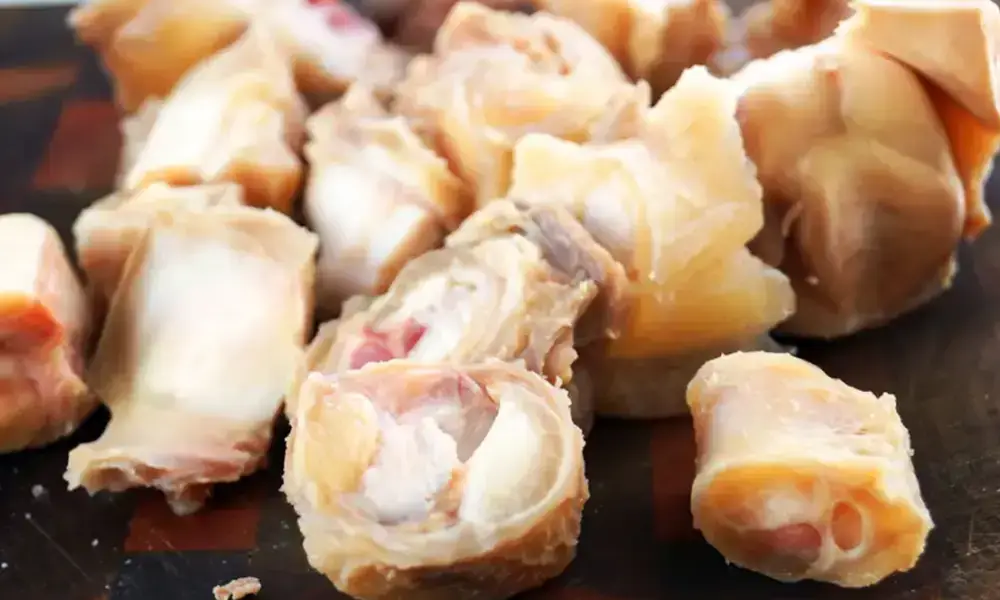
Beef tendon has a reputation for being intimidating, mostly because people don’t know what to do with it. Once you understand how to cook beef tendon properly, though, it’s one of the easiest cuts to get right. There’s no delicate timing, no risk of overcooking. You just need patience, and the reward is a silky, collagen-rich addition to broths, soups, and braises.
What Is Beef Tendon, Exactly?
Tendon is the connective tissue that attaches muscle to bone. It’s almost entirely collagen, which means it starts out tough and rubbery but becomes soft, gelatinous, and almost translucent once it’s been cooked low and slow for long enough.
This is a staple cut in many cuisines that value nose-to-tail cooking, from Vietnamese pho to Chinese braised tendon dishes and Korean soups. It’s prized not just for texture, but for the rich body it adds to broths and stocks.
Why Beginners Should Give Beef Tendon a Try
- It’s nearly foolproof. Unlike steak, there’s no risk of drying it out. Longer cooking only improves the texture.
- It’s budget-friendly. Tendon is one of the most affordable cuts available, making it an easy way to add depth to meals without blowing the budget.
- It enriches everything around it. Added to a pot of broth or stew, tendon naturally thickens and enriches the liquid as it breaks down.
How to Cook Beef Tendon: Step-By-Step
Step 1: Blanch the Tendon First
Place the beef tendon in a pot of cold water and bring it to a boil for 5 minutes. Drain and rinse. This step removes impurities and any residual blood, giving you a cleaner-tasting final dish.
Step 2: Start the Long Simmer
Add the blanched tendon to a fresh pot of water or stock, along with aromatics like ginger, garlic, spring onion, star anise, or bay leaves, depending on the flavour direction you’re going for.
Step 3: Simmer Low and Slow
Bring to a gentle simmer, then cover and cook for 3 to 4 hours on the stovetop, or use a pressure cooker for around 45 to 60 minutes if you’re short on time. The tendon is ready when it’s soft enough to easily pierce with a fork and has turned slightly translucent.
Step 4: Slice and Serve
Once tender, slice the tendon into bite-sized pieces. It’s commonly served in noodle soups, braised with soy sauce and spices, or added back into a rich stew for extra body.
Common Mistakes to Avoid
- Rushing the cook time. Tendon that hasn’t had enough time will stay chewy and rubbery rather than soft.
- Skipping the blanch. This step makes a real difference to the final flavour and clarity of your broth.
- Under-seasoning. Tendon itself is fairly neutral in flavour, so it relies on the aromatics and broth around it to shine.
A Simple Beef Tendon Broth Recipe
If you want a straightforward way to start, try this:
- Blanch 200g beef tendon as described above
- Simmer in 1.5 litres of water with 1 sliced onion, 3 garlic cloves, a thumb of ginger, and 2 star anise for 3.5 hours
- Season with soy sauce, a splash of fish sauce, and white pepper to taste
- Serve over rice noodles with bean sprouts, coriander, and a squeeze of lime
Why Quality Matters Even With Tendon
Tendon is a simple cut, but it still benefits from a clean starting point. Our Beef Tendon comes from 100% grass-fed and grass-finished Australian cattle, supplied in approximately 200g packs, perfect for a single broth recipe without waste.
For an even richer base, try combining it with our beef bone broth and tallow range to build a deeply nourishing stock.
Final Thoughts
Beef tendon might look unfamiliar on the shelf, but it’s genuinely one of the most beginner-friendly cuts to cook once you understand the process: blanch, simmer, and be patient. The payoff is a silky, savoury addition to broths and braises that’s hard to replicate any other way.
Ready to try it for yourself? Order Beef Tendon from Gingin today and start building richer, more nourishing broths at home.
Frequently Asked Questions
Is beef tendon healthy?
Tendon is largely collagen, which has long been valued in traditional diets for supporting joint and skin health, though it’s not a significant source of protein on its own compared to muscle meat.
Does beef tendon have a strong flavour?
No, tendon itself is quite mild and gelatinous. It takes on the flavour of whatever broth or sauce it’s cooked in.
Can I cook beef tendon in advance?
Yes, it actually improves with a rest. Cook it a day ahead, refrigerate in its liquid, and reheat gently before serving.