
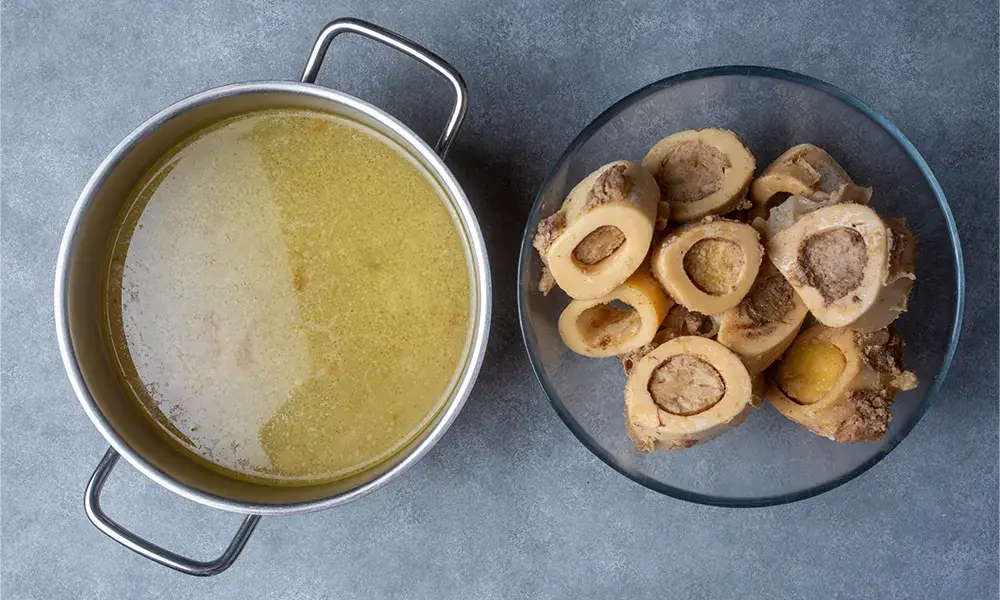
Quick answer: Beef bone broth is a savoury liquid made by simmering beef bones, often for 12–24 hours. It provides fluid, some protein (mostly gelatine from collagen) and small amounts of minerals, and many people enjoy it as a warming drink or a base for soups. Evidence that it improves joints, skin or gut health is limited, and its nutrition varies a lot between batches. Treat it as a nourishing food, not a treatment.
Bone broth is everywhere, and so are the claims about it. This guide separates what’s well supported from what’s mostly hype, based on what dietitians say. It also covers what’s in beef bone broth, how to make it, how to use and store it, and where to buy it in Perth.
What Is Beef Bone Broth?
Beef bone broth is made by simmering beef bones, often with marrow and connective tissue, in water with vegetables and herbs for many hours. The long cooking dissolves collagen from the bones and connective tissue into gelatine, which is why good bone broth sets to a jelly when it’s chilled.
Bone broth vs stock vs broth
The words overlap. Bone broth is simmered much longer than ordinary stock or broth, typically 12 hours or more, so it’s usually richer in gelatine and has a fuller flavour. There’s no standard recipe, so the label alone doesn’t tell you how much goodness is inside.
What’s In Beef Bone Broth?
- Protein: mostly collagen-derived protein and gelatine. The amount varies considerably with the bones used, the cooking time and how much water is added, so check the label.
- Amino acids: including glycine and proline, which come from collagen.
- Minerals: small amounts of minerals such as calcium, magnesium and phosphorus. Don’t rely on bone broth as a major source of calcium.
- Fluid and sodium: broth hydrates, and its salt content depends on what’s added.
- Fat: usually low, but it depends on whether the fat is skimmed.
Gelatine is not a complete protein, so broth shouldn’t replace foods like meat, eggs, fish, dairy or legumes.
Is Beef Bone Broth Good For You?
Bone broth can be a comforting, hydrating food that adds a modest amount of protein. The bigger health claims are less certain. Dietitians quoted by Which?, National Geographic and TODAY say most of the research behind them involves isolated collagen supplements rather than broth itself.
| Common claim | What the evidence shows |
|---|---|
| Hydration and comfort | Plausible. It’s a warm, savoury fluid that many people find easy to drink, particularly when unwell or when cooking for others. |
| Protein | Modest and variable. Check the label, because the amount differs between broths. |
| Minerals | Small amounts. Not a reliable way to meet calcium or magnesium needs. |
| Joint health | Some studies suggest collagen supplements help, but there’s little direct evidence that drinking bone broth does the same. |
| Skin health | As with joints, the research is mostly on collagen supplements, not broth. |
| Gut health | Often claimed, but direct evidence is limited. |
In short, bone broth is a nutritious, low-fuss food that fits well in a balanced diet, but it isn’t a cure for anything.
Who should check with a health professional first?
Talk to your doctor or an accredited dietitian before making bone broth a regular habit if you have kidney disease, follow a low-sodium diet, or have histamine intolerance, since long-simmered broths can suit some people less well. This post is general information, not medical advice.
How To Make Beef Bone Broth At Home
Ingredients (makes about 3 litres)
- 2 kg beef bones (marrow, knuckle, neck or joint bones)
- 1 onion, halved
- 2 carrots and 2 celery stalks, roughly chopped
- 4 garlic cloves
- 2 bay leaves and a few peppercorns
- 1 tbsp apple cider vinegar (optional)
- About 4 litres of cold water
Method
- Roast the bones at 200°C for 30–45 minutes until deeply browned, for a richer flavour.
- Add everything to a large pot or slow cooker and cover with cold water by about 5 cm.
- Bring to a gentle simmer and skim off any foam from the surface.
- Simmer gently for 12–24 hours, topping up with water if the bones are no longer covered. A slow cooker on Low is easiest. Don’t leave an open flame unattended overnight.
- Strain, cool and chill. The broth should set like a loose jelly. Lift the fat off the top.
- Season to taste when you use it, rather than during cooking.
A splash of vinegar is traditional and many cooks add it, though evidence that it extracts more minerals is limited.
What Are The Best Bones For Beef Bone Broth?
Bones with lots of connective tissue give the most gelatine and the best body:
- Knuckle and joint bones for collagen
- Marrow bones for richness
- Oxtail and neck bones for meaty flavour
Ask your butcher what they have.
Homemade Vs Store-Bought Bone Broth
| Homemade | Store-bought | |
|---|---|---|
| Control over ingredients | Complete | Depends on the brand |
| Time | 12–24 hours | None |
| Cost | Low per litre, if bones are inexpensive | Higher per litre |
| Consistency | Varies from batch to batch | More consistent |
| Best for | Cooks who enjoy the process | Busy households |
When you’re buying broth, look for a short ingredient list, a clear source for the bones, the protein per serve, the sodium level and no unnecessary additives.
How To Use Beef Bone Broth
- Sip it warm in a mug with a pinch of salt
- Soups and stews, in place of water or stock
- Gravy and sauces, for extra body
- Cook rice, risotto or grains in it for more flavour
- Braises and casseroles, such as our beef bourguignon or quick beef stroganoff
How To Store Bone Broth
- Fridge: cool it quickly and refrigerate within two hours. Keep it in an airtight container for up to 4 days.
- Freezer: freeze in portions for up to 3 months. Ice cube trays are handy for small amounts.
- Reheating: bring to a gentle simmer until steaming hot all the way through. The Food Safety Information Council recommends reheating leftovers to 75°C.
Common Mistakes When Making Bone Broth
- Boiling hard. A rolling boil makes the broth cloudy. Keep it at a gentle simmer.
- Too much water. The broth won’t gel. Cover the bones by about 5 cm.
- Skipping the skim. Foam gives a bitter, cloudy result.
- Using only lean bones. Bones with joints and connective tissue give the best body.
- Salting too early. The broth reduces, so season at the end.
Where To Buy Beef Bone Broth In Perth
If you don’t have 12–24 hours to spare, our Grass Fed Beef Bone Broth is made by slowly simmering grass-fed bones from cattle raised on Western Australian farms, and is delivered fresh across our Perth zones. It’s available as a one-off purchase or on subscription. You can also browse our beef broth and tallow range and our free-range chicken broths.
Final Thoughts
Beef bone broth is a simple, savoury food with a modest amount of protein and a lot of comfort. Enjoy it for its flavour and versatility, keep expectations realistic about the health claims, and choose a broth made from good bones.
Want it ready to go? Order our Grass Fed Beef Bone Broth and have it delivered fresh in Perth.
Beef Bone Broth Faqs
Is drinking beef bone broth good for you?
It can be a hydrating, comforting food that adds a modest amount of protein and some minerals. Evidence for bigger claims about joints, skin and gut health is limited. It suits most people as part of a balanced diet, but it isn’t a treatment for any condition.
Does bone broth contain collagen?
Yes, in the form of gelatine and collagen-derived amino acids. The amount varies widely with the bones and cooking time. Studies showing benefits from collagen mostly use supplements, so it’s not clear that broth has the same effect.
How long should you simmer beef bone broth?
Typically 12–24 hours at a gentle simmer. Longer cooking extracts more gelatine and flavour, but there’s no need to go past 24 hours for a good result.
What’s the difference between bone broth and stock?
Bone broth is simmered much longer than ordinary stock, so it’s usually richer in gelatine and sets when chilled. The terms overlap and there’s no standard definition, so check how it was made.
How much bone broth can you drink a day?
There’s no official recommended amount. Many people enjoy a cup (250 ml) now and then as part of a varied diet. Watch the sodium, and speak to a dietitian if you have a medical condition.
Is store-bought bone broth as good as homemade?
It can be, if it’s made from quality bones with a short ingredient list. Nutrition varies between brands and between homemade batches, so check the label for protein and sodium.