
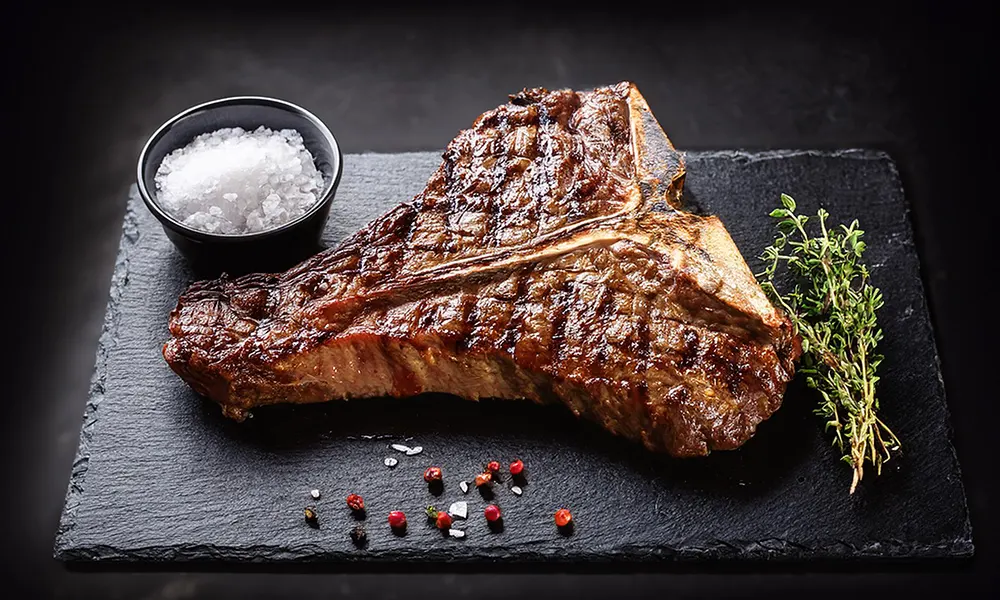
The T-bone steak is one of the most satisfying cuts you can bring to the table. It combines two premium textures in one piece of meat: a tender fillet on one side and a flavour-rich strip steak on the other, separated by a T-shaped bone that helps lock in moisture and depth of taste during cooking.
If you’ve ever wondered how to cook T bone steak properly without drying it out or ending up with uneven doneness, this guide walks through everything step by step. You’ll learn what makes a beef steak T-bone special, how to prepare it, and how to cook it so it turns out juicy, tender, and full of flavour every time.
What Is a Beef T-Bone Steak?
A beef T-bone steak comes from the short loin section of the cow. What makes it unique is that it contains two different cuts:
- Strip steak (New York strip) – rich, beefy flavour with a firmer bite
- Tenderloin (smaller section of filet mignon) – soft, buttery texture
- T-shaped bone – runs through the centre, adding flavour and helping retain moisture
This combination makes it one of the most popular steakhouse cuts because you get two eating experiences in one plate.
T-Bone vs Porterhouse
These two are often confused:
- T-bone: smaller tenderloin section
- Porterhouse: larger tenderloin section (more premium cut)
Both cook similarly, but portion size differs.
Why T-Bone Steak Is So Popular
People love T-bone steak because it offers:
- Two textures in one cut
- Strong beef flavour from the bone
- Excellent results on grill or pan
- Fast cooking time compared to larger roasts
- Works well with simple seasoning
When sourced well, especially from grass-fed producers like Gingin Grass Fed, the natural flavour stands out without needing heavy marinades.
Choosing the Right T-Bone Steak
Before cooking, quality matters more than technique.
Look for:
- Even thickness (at least 2.5–4 cm ideal)
- Bright red colour
- Fine marbling (thin white fat lines)
- Firm texture (not soft or wet)
- Clean bone structure with minimal trimming waste
A good cut already sets you up for success when learning how to cook T bone steak properly.
Ingredients for a Simple Beef T-Bone Steak Recipe
You don’t need much for a great result:
- 1 T-bone steak (room temperature)
- Sea salt flakes
- Fresh cracked black pepper
- 1–2 tbsp olive oil or beef tallow
- 2–3 garlic cloves (optional)
- Fresh rosemary or thyme (optional)
- Butter (for finishing)
Simple seasoning allows the natural beef flavour to stand out.
Step 1: Bring the Steak to Room Temperature
Take your steak out of the fridge 30–45 minutes before cooking.
Why this matters:
- Helps even cooking
- Prevents cold centre with overcooked edges
- Improves crust formation
Pat the steak dry with paper towels before seasoning. Moisture is the enemy of a good crust.
Step 2: Season Properly
A classic beef steak T-bone doesn’t need complex marinades.
Do this:
- Salt generously on both sides
- Add black pepper just before cooking
- Light oil coating for even browning
Let it sit for 10–15 minutes after seasoning so the salt starts drawing flavour into the surface.
Step 3: Choose Your Cooking Method
There are two reliable ways to cook T-bone steak:
1. Pan-Seared + Oven Finish (Best Control Method)
2. Grill Method (Best Smoky Flavour)
We’ll cover both so you can choose based on your setup.
Step 4: Pan-Seared T-Bone Steak Method
This is one of the most reliable ways to achieve a juicy centre.
Instructions:
- Heat a heavy pan (cast iron works best) until very hot
- Add a small amount of oil or beef tallow
- Place steak down and don’t move it for 2–3 minutes
- Flip and sear the other side
- Sear edges for extra crust
At this stage, you’re building flavour through caramelisation.
Then:
- Transfer pan to oven (180–200°C)
- Cook until internal temperature reaches desired doneness
Step 5: Grill Method for T-Bone Steak
Grilling gives a smoky finish and is perfect for outdoor cooking.
Instructions:
- Preheat grill to high heat
- Oil the grates lightly
- Place steak over direct heat
- Grill 3–4 minutes per side
- Move to indirect heat if needed for finishing
Rotate once for grill marks if desired.
Internal Temperatures Guide
To avoid overcooking your beef steak T-bone, use a thermometer:
- Rare: 50–52°C
- Medium-rare: 54–57°C
- Medium: 60–63°C
- Medium-well: 65–68°C
Medium-rare is often preferred for balance of tenderness and juiciness.
Resting the Steak (Very Important Step)
After cooking:
- Rest for 5–10 minutes
- Loosely cover with foil
- Do not cut immediately
Resting allows juices to redistribute, keeping every bite moist.
Butter Basting, Common Mistakes & Recipe Variations for T-Bone Steak
Now that you’ve covered the basics of choosing, seasoning, and cooking methods, this section focuses on what takes a good beef steak T-bone to a restaurant-style result at home.
We’ll look at butter basting, frequent cooking mistakes, and flavour variations you can use to turn a simple beef T bone steak recipe into something more interesting without complicating the process.
Butter Basting for Extra Juiciness
Butter basting is one of the simplest ways to improve flavour and texture. It adds richness and helps keep the surface moist during the final stage of cooking.
What you need:
- 2–3 tbsp butter
- 2 garlic cloves (lightly crushed)
- Fresh thyme or rosemary
- Spoon for basting
How to do it:
Once your steak is nearly cooked:
- Lower heat slightly after searing
- Add butter, garlic, and herbs to the pan
- Tilt the pan so butter pools on one side
- Spoon melted butter continuously over the steak for 1–2 minutes
- Flip and repeat briefly
This step enhances flavour and creates a glossy finish on the crust.
Common Mistakes When Cooking T-Bone Steak
Even a good cut can turn out poorly if a few basics are missed. Here’s what to avoid when learning how to cook T bone steak properly.
1. Cooking straight from the fridge
Cold meat cooks unevenly. The outside overcooks before the centre warms up.
2. Not drying the surface
Moisture stops proper browning. Always pat dry before seasoning.
3. Overcrowding the pan or grill
Too much heat loss leads to steaming instead of searing.
4. Flipping too often
Let a crust form before turning. Constant flipping prevents proper caramelisation.
5. Skipping the resting step
Cutting too early causes juices to spill out, leaving the steak dry.
Simple Beef T-Bone Steak Recipe Variations
Once you’ve mastered the basic method, you can adjust flavours depending on mood or occasion.
1. Garlic Herb T-Bone Steak
A classic flavour profile that works well for dinner meals.
Ingredients added:
- Garlic (minced or crushed)
- Rosemary
- Thyme
- Butter finish
Result: Rich, aromatic steak with a traditional finish.
2. Spicy Rub T-Bone Steak
For those who like heat and bold seasoning.
Rub mix:
- Smoked paprika
- Cayenne pepper
- Garlic powder
- Onion powder
- Salt
Let the rub sit on the steak for 20–30 minutes before cooking.
Result: Deep colour, smoky heat, and strong crust.
3. BBQ Style T-Bone Steak
Perfect for outdoor grilling.
Glaze option:
- Light BBQ sauce brushed in the last 2 minutes
- Optional honey for sweetness
Result: Slight caramelisation with a sticky finish
4. Pepper Crust T-Bone Steak
Simple but powerful.
Method:
- Crush black peppercorns and press into steak
- Sear in hot pan
- Finish with butter only
Result: Sharp pepper heat balanced with rich beef flavour.
Why Quality Meat Changes Everything
The outcome of any beef T bone steak recipe depends heavily on the meat itself.
Grass-fed beef tends to:
- Have deeper natural flavour
- Contain less excess fat
- Cook slightly faster due to leanness
- Work best with simple seasoning
High-quality sourcing makes a noticeable difference in both taste and texture. Producers like Gingin Grass Fed focus on pasture-raised cattle, which helps deliver consistent results in home cooking.
Pro Butcher Tips for Better T-Bone Results
These are small adjustments that improve results instantly:
- Use a cast iron pan instead of non-stick
- Always preheat your pan fully before adding steak
- Use tallow or high-smoke-point oil for better crust
- Season just before cooking or slightly ahead (not hours before)
- Slice against the grain when serving
These details separate average home-cooked steak from something closer to a steakhouse standard.
Nutrition, Serving Ideas, Storage Tips & Final Guide to T-Bone Steak
This final section brings everything together. You now know how to cook, season, and refine your beef steak T-bone. Here we’ll look at nutrition, serving ideas, storage, and a complete wrap-up of the beef T bone steak recipe so you can repeat it confidently anytime.
Beef T-Bone Steak Nutrition Guide
When people search for beef rump steak nutrition or similar cuts, T-bone steak often comes up as a nutrient-dense option. It’s a whole-food protein source that delivers energy, satiety, and key minerals.
Typical nutrition (per 100g cooked T-bone steak):
- Protein: 23–27g
- Fat: 18–22g (varies by trimming)
- Iron: High
- Zinc: High
- Vitamin B12: High
- Calories: 250–300 kcal
Key nutritional benefits:
1. High-quality protein
Supports muscle repair, strength, and recovery.
2. Iron-rich food
Helps oxygen transport and energy levels.
3. Zinc support
Important for immune function and metabolism.
4. Vitamin B12
Supports brain function and nervous system health.
T-bone steak fits well in balanced eating patterns when portioned properly and paired with vegetables or salads.
Is T-Bone Steak Healthy?
Yes, when eaten in moderation and prepared simply.
Better choices include:
- Grilling or pan-searing
- Minimal added sauces
- Grass-fed cuts with natural fat balance
Steak from trusted producers like Gingin Grass Fed also tends to have a cleaner ingredient profile due to pasture-based farming practices.
Best Side Dishes for T-Bone Steak
A well-cooked steak deserves simple but balanced sides.
1. Classic sides
- Roast potatoes
- Garlic butter mash
- Steamed green beans
- Grilled asparagus
2. Fresh options
- Garden salad with vinaigrette
- Tomato and cucumber salad
- Rocket with parmesan and olive oil
3. Heavier pairings
- Mac and cheese
- Creamy mushroom sauce
- Corn on the cob with butter
The goal is balance — rich steak with lighter or contrasting sides.
How to Store Cooked T-Bone Steak
If you have leftovers:
Refrigeration:
- Store in airtight container
- Keep for up to 3 days
Freezing:
- Wrap tightly in foil or freezer bag
- Store up to 2–3 months
Reheating tips:
- Low oven heat (120–150°C) works best
- Add a small amount of butter or broth to prevent dryness
- Avoid microwaving if possible (it toughens texture)
Quick Recap: How to Cook T Bone Steak
Here’s a simple summary of the process:
- Bring steak to room temperature
- Season with salt and pepper
- Sear in a hot pan or grill
- Cook to desired internal temperature
- Butter baste for added flavour
- Rest for 5–10 minutes before slicing
This method works every time once you get the timing right.
Final Thoughts
A well-cooked T-bone steak is simple but rewarding. The key is not complexity — it’s timing, heat control, and quality meat.
Once you understand the basics of how to cook T bone steak, you can adjust flavour, doneness, and cooking style easily depending on the occasion.
The cut itself already carries a lot of character, so the less you overcomplicate it, the better it turns out.
Get Better Results with Quality T-Bone Steak
If you want consistent flavour and tenderness, starting with properly raised beef makes a real difference. Grass-fed, ethically sourced cuts from Gingin Grass Fed are ideal for home cooking because they respond well to simple seasoning and high-heat cooking.
if you’re ready to take your steak nights up a level, start with premium-quality cuts delivered straight to your door.
Choose from grass-fed, ethically raised beef and enjoy better flavour at home with every cook.
👉 Order your T-bone steak and other premium cuts today from Gingin Grass Fed and bring steakhouse-quality meals to your kitchen — without the guesswork.
FAQs
What is a beef T-bone steak exactly?
It’s a cut from the short loin containing both strip steak and tenderloin separated by a T-shaped bone.
What’s the best doneness for T-bone steak?
Medium-rare is preferred for tenderness and juiciness.
Can I cook T-bone steak in the oven only?
Yes, but best results come from searing first then finishing in the oven.
How long should I cook T-bone steak?
Usually 3–5 minutes per side plus oven finishing depending on thickness.
Why is my steak tough?
Overcooking or skipping resting time are the most common reasons.